

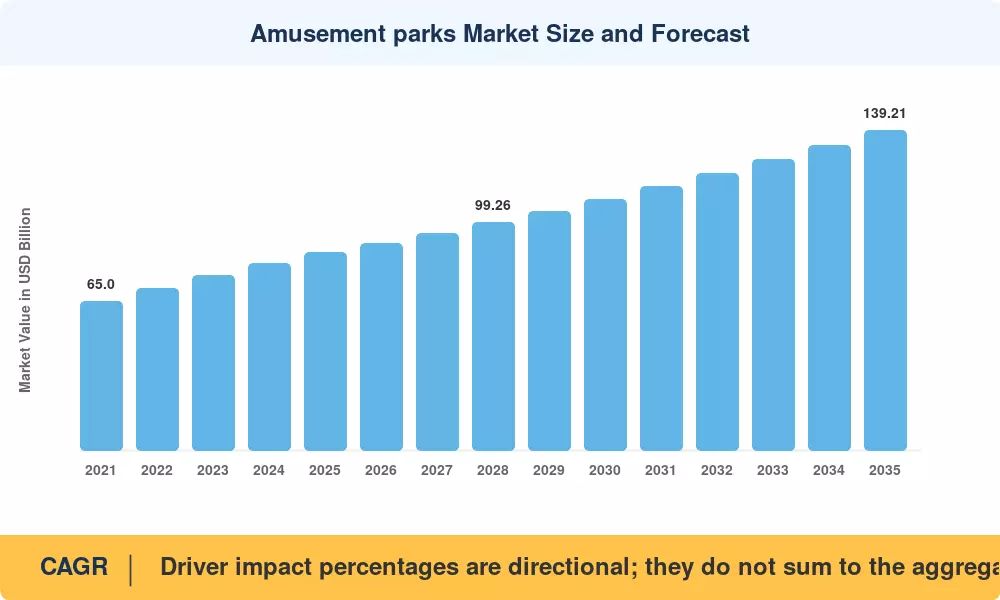
Amusement Parks Market to Reach USD 139.21 Billion by 2035, Growing at 4.95% CAGR
Amusement Parks Market
North America captured 32.8% of the Amusement Parks Market in 2025, supported by high consumer spending power and established destination parks.
NEW YORK, NY, UNITED STATES, August 31, 2026 /EINPresswire.com/ -- According to Market Research Future, the Amusement Parks Market is projected to grow from USD 90.12 Billion in 2026 to USD 139.21 Billion by 2035, registering a CAGR of 4.95% during the forecast period (2026–2035). This steady growth reflects the enduring global appeal of immersive entertainment experiences, where amusement parks continue to evolve from simple ride collections into comprehensive entertainment destinations that integrate cutting-edge technology, intellectual property, and hospitality. The Recreational Vehicles Market has experienced parallel growth as outdoor leisure activities expand, while the Golf Cart Market continues to see increased adoption within amusement parks for guest transportation and operational efficiency.Market Overview
Amusement parks encompass a diverse range of entertainment destinations including theme parks, water parks, traditional amusement parks, family entertainment centers, and specialty attractions that collectively serve millions of visitors annually. These facilities feature mechanical rides, water attractions, immersive dark rides, flat rides, carousels, shows, simulators, and observation rides that cater to visitors across all age groups. The market operates through multiple revenue streams including admission ticketing, food and beverages, merchandise retail, hotels and resorts, parking, and special events that create comprehensive entertainment ecosystems .
The key growth drivers propelling this market expansion include rising disposable incomes and increasing consumer spending on leisure and recreational activities across both developed and emerging economies. The growing popularity of experiential travel and family-oriented vacations has created sustained demand for destination parks that offer immersive, story-driven experiences. Integration of advanced technologies including augmented reality, virtual reality, artificial intelligence, and mobile applications is enhancing visitor engagement and operational efficiency. The expansion of indoor amusement parks in urban centers supports year-round operations and weather-independent visitor flow .
Technological developments are reshaping the amusement park landscape at an accelerating pace. Advanced ride technologies featuring high-speed launches, multi-dimensional motion, and synchronized media are creating more thrilling and immersive experiences. The integration of AR and VR technologies into dark rides and attractions enables new forms of storytelling and interactivity that appeal to tech-savvy visitors . Smart park technologies, including mobile ticketing, digital queue management, and personalized guest experiences through loyalty programs and mobile apps, are enhancing operational efficiency and visitor satisfaction. Sustainability initiatives, including energy-efficient designs and eco-friendly operations, are becoming increasingly important across the industry .
Market Segmentation
The amusement parks market is segmented based on park type, ride type, revenue source, age group, and ownership model to provide comprehensive insights into the industry landscape.
By Park Type: The market is categorized into Theme Parks, Water Parks, Amusement Parks (Traditional), and Others including Family Entertainment Centers and Specialty Parks. Theme parks dominate the market, featuring immersive themed environments, storytelling, and branded attractions that create destination appeal. Water parks represent a significant growth segment, particularly in regions with warm climates and growing tourism infrastructure. Indoor amusement parks, including FECs located in malls and commercial complexes, are expanding rapidly in urban areas, offering weather-independent operations and year-round visitor flow .
By Ride Type: The market covers Roller Coasters, Water Rides & Slides, AR/VR Dark Rides, Flat Rides & Carousels, and Others including shows, simulators, and observation rides. Roller coasters remain the cornerstone of the amusement park experience, driving visitor attendance and thrill-seeking demand. AR/VR dark rides are the fastest-growing ride segment, leveraging immersive technology to create new storytelling possibilities and enhance visitor engagement. Water rides and slides continue to attract families and groups, particularly in water parks and combination parks .
By Revenue Source: The market is segmented into Admission & Ticketing, Food & Beverages, Merchandise & Retail, Hotels & Resorts, and Others including parking and events. Admission and ticketing remain the primary revenue source, with operators increasingly adopting dynamic pricing models, online pre-booking, and loyalty programs to optimize revenue and manage crowd flow. Food and beverages represent a significant and growing revenue stream, with parks investing in diverse culinary offerings and premium dining experiences. Hotels and resorts integration is expanding as operators seek to extend visitor stay duration and capture hospitality revenue .
By Age Group: The market serves Children (0–19), Adults (20–54), and Seniors (55+). Adults account for approximately 52% of total demand, driven by thrill-based attractions, immersive experiences, and premium services. Children represent approximately 48% of demand, making them a core end-user segment, with parks designing kid-focused attractions emphasizing safety, learning, and interaction. Family-oriented visitation patterns strongly support both segments, with parents prioritizing safe and engaging recreational environments .
By Ownership Model: The market is divided into Private-Corporate, Private-Family, and Public/Government-Backed ownership. Corporate-owned parks, including major chains and publicly traded operators, dominate the market with substantial capital investment and professional management. Government-backed parks focus on affordability, cultural promotion, and tourism development, contributing to local economies and public well-being .
By Region: The market analysis covers North America, Europe, South America, Asia Pacific, and the Middle East and Africa.
🛒 You can buy this market report at:
https://www.marketresearchfuture.com/checkout?currency=one_user-USD&report_id=20295
Regional Analysis
North America holds approximately 29% of the global amusement parks market share, making it one of the most mature and revenue-stable regions in the industry . The United States drives the regional market with iconic destinations like Walt Disney World, Universal Studios, and Six Flags, supported by high domestic tourism, advanced infrastructure, and continuous investment in ride innovation and immersive experiences . The region benefits from well-developed tourism infrastructure, high consumer spending on leisure activities, and strong demand for seasonal events and IP-based attractions. Canada's market is expanding with popular sites including Canada's Wonderland and La Ronde, with increased domestic tourism and investments in indoor amusement spaces, particularly in colder regions .
Europe accounts for nearly 24% of the global market share, supported by a diverse mix of theme parks, regional parks, and family entertainment centers . Germany leads the region with strong domestic tourism and high-quality infrastructure, including Europa-Park, the country's largest theme park . The United Kingdom benefits from a rich entertainment culture and strong brand partnerships, with popular destinations like Alton Towers and Thorpe Park incorporating intellectual properties to enhance visitor appeal. Intra-regional tourism and cross-border travel support attendance, while sustainability initiatives and eco-friendly operations are key focus areas for European operators .
Asia Pacific is witnessing rapid expansion due to rising middle-class income, urbanization, and a strong appetite for family entertainment . Japan's market thrives on strong domestic tourism and pop culture influence, with major parks like Tokyo Disneyland and Universal Studios Japan attracting millions annually through anime-themed attractions and seasonal events. India's market is expanding rapidly due to a growing middle class and rising disposable incomes, with parks like Imagicaa and Wonderla drawing large crowds. China and Southeast Asian nations are developing new park destinations supported by improved infrastructure and government tourism initiatives .
South America and the Middle East and Africa represent developing markets with growing potential as tourism infrastructure expands and disposable incomes rise.
Competitive Landscape and Key Players
The amusement parks market is highly competitive, featuring a mix of global entertainment conglomerates, regional operators, and specialized attraction providers. The competitive landscape is characterized by continuous investment in new attractions, intellectual property integration, and technological innovation.
Key players operating in this market include The Walt Disney Company, Universal Studios (Comcast Corporation), Six Flags Entertainment Corporation, Merlin Entertainment, Cedar Fair Entertainment Company, SeaWorld Parks & Entertainment, Palace Entertainment, Adventure Parks Group, Samsung Everland, and Hong Kong International Theme Parks .
Strategic developments are reshaping the competitive landscape. Major operators are investing billions in new attractions, themed lands, and resort expansions to maintain visitor interest and drive repeat visitation. IP integration with major media franchises, including superheroes, animation, and film properties, creates powerful brand appeal and cross-promotional opportunities. Operators are expanding their international presence through new park developments and acquisitions in high-growth regions.
Innovation and technology initiatives are accelerating across the industry. Companies are investing in AR/VR-based attractions, mobile app integration for digital queue management and personalized experiences, and data analytics for crowd management and operational optimization. Sustainability initiatives, including energy-efficient operations and waste reduction, are becoming competitive differentiators.
Latest Industry News and Developments
Recent industry developments highlight the dynamic nature of the amusement parks market. Major operators continue to announce significant investments in new attractions and park expansions, with themed lands based on popular intellectual properties driving visitor interest and attendance growth.
Technology integration remains a key focus, with operators deploying mobile apps featuring digital ticketing, virtual queuing, and personalized guest experiences. AI-powered crowd management and operational optimization systems are being implemented to enhance efficiency and visitor satisfaction.
Sustainability initiatives are gaining prominence, with operators investing in energy-efficient rides, renewable energy generation, water conservation, and waste reduction programs. These efforts align with growing consumer expectations for environmental responsibility and regulatory requirements.
Market Challenges and Opportunities
The amusement parks market faces several key challenges that could impact growth trajectories. High capital investment requirements for new attractions and park expansions create significant financial barriers. Seasonality in many regions affects operational planning and revenue predictability. Weather dependency for outdoor parks can impact attendance and operational costs. Regulatory compliance across different regions adds complexity to operations and expansion strategies.
Emerging opportunities are abundant in the evolving entertainment landscape. The integration of immersive technologies, including AR/VR and AI-powered experiences, presents significant growth potential for enhanced visitor engagement. The expansion of indoor amusement parks in urban centers supports year-round operations and weather-independent visitor flow. The growing demand for experiential travel and family-oriented vacations continues to drive attendance at destination parks. The integration of hospitality and retail with amusement park experiences creates comprehensive entertainment destinations that extend visitor stay duration and increase per-capita spending.
To explore more market insights, visit us at:
https://www.marketresearchfuture.com/reports/amusement-parks-market-20295
Final Market Summary
The amusement parks market is positioned for steady growth, driven by rising disposable incomes, technological innovation, and the enduring appeal of immersive entertainment experiences. The market's trajectory from USD 90.12 Billion in 2026 to USD 139.21 Billion by 2035 reflects the continued investment in new attractions, the expansion of themed entertainment destinations, and the growing integration of technology across the visitor experience.
The long-term industry potential remains strong, with advancements in immersive technologies, sustainability initiatives, and destination resort integration continuing to expand the addressable market. The convergence of amusement parks with broader entertainment ecosystems, including media franchises, hospitality, and retail, is creating comprehensive experiences that serve diverse visitor needs across age groups and regions.
Key factors expected to influence future development include the pace of technology adoption, the evolution of visitor expectations, and the expansion of tourism infrastructure. The development of smart park technologies and immersive attractions will enhance visitor engagement and operational efficiency. As consumer spending on experiences continues to grow, the amusement parks market will continue to expand, ensuring sustained innovation and growth throughout the forecast period and beyond.
More Related Reports from MRFR Library:
Europe Heavy Duty Trucks Market : https://www.marketresearchfuture.com/reports/europe-heavy-duty-trucks-market-56730
US Heavy Duty Trucks Market : https://www.marketresearchfuture.com/reports/us-heavy-duty-trucks-market-57275
South Africa Heavy Duty Engines Market : https://www.marketresearchfuture.com/reports/south-africa-heavy-duty-engines-market-57913
India Ambulance Market : https://www.marketresearchfuture.com/reports/india-ambulance-market-58288
Automotive Thermal System Components Market : https://www.marketresearchfuture.com/reports/automotive-thermal-system-components-market-59408
Australia Car Finance Market : https://www.marketresearchfuture.com/reports/australia-car-finance-market-63660
Aerospace Parts Repair and Overhaul Services Market : https://www.marketresearchfuture.com/reports/aerospace-parts-repair-and-overhaul-services-market-65835
Aircraft Engine Maintenance and Repair Services Market : https://www.marketresearchfuture.com/reports/aircraft-engine-maintenance-and-repair-services-market-65874
CNC Machine Repair & Maintenance Services Market : https://www.marketresearchfuture.com/reports/cnc-machine-repair-maintenance-services-market-66229
Cosmetic Manufacturing MRO Services Market : https://www.marketresearchfuture.com/reports/cosmetic-manufacturing-mro-services-market-66378
Market Research Future
Market Research Future
+1 855-661-4441
email us here
Legal Disclaimer:
EIN Presswire provides this news content "as is" without warranty of any kind. We do not accept any responsibility or liability for the accuracy, content, images, videos, licenses, completeness, legality, or reliability of the information contained in this article. If you have any complaints or copyright issues related to this article, kindly contact the author above.
